
Summer holidays: 10 easy ways to boost speech and language skills (without your child even noticing!)

Ah, the summer holidays... Longer days. Slower mornings (hopefully!). Ice creams, paddling pools, trips to the park and those inevitable moments when a little voice announces “I'm boooooored!” Growing up in a world before tablets and Wi-Fi, I remember saying the same thing to my mum. Her response; "Well, find something to do then!" And somehow... we always did.
The truth is boredom isn't always a bad thing. It sparks creativity, imagination, problem-solving and conversation - all brilliant ingredients for developing speech and language skills. The good news? You don't need expensive activities, worksheets or hours of planning. Some of the best language learning happens naturally through everyday moments.
Before we begin... here's one simple tip:
When we're chatting with children, it's easy to slip into "quiz mode": "What colour is it?", "What's that?", "What do you think happens next?"
Of course, questions have their place, but children often hear hundreds of them every day! Instead, try making more comments than questions. Describe what you notice, think out loud, wonder together and give your child time to join in if they want to. For example, instead of asking: "What can you hear?" Try saying: "I can hear birds singing over there... and I think I can hear the wind in the trees too." Or instead of: "What do you think lives under this log?" Try: "I wonder who lives under here... it's cool and damp, maybe a slug is hiding underneath."
Comments model rich language without putting children on the spot. They keep conversations flowing naturally and show that chatting together is more important than getting the "right" answer. With that in mind, here are some of my favourite low-prep, low-cost activities to try this summer.
1. The Alphabet Game

Perfect for long car journeys, walks or even waiting for lunch to arrive. Can you spot something beginning with each letter of the alphabet?
Older children can read words on road signs, shop names or lorries. Younger children can simply look for objects around them:
· A = ant
· B = bird
· C = cloud
Want to make it more exciting?
· Race each other to find the next letter
· No repeats allowed! Everyone must find their own word
Rather than testing each other, keep the conversation going with comments e.g. "I've spotted a bright red bus for B!" or "That sign starts with S - I hadn't noticed it before."
You're building vocabulary, sound awareness and attention without anyone realising they're learning.
2. Give "I Spy" a makeover
Everyone knows the classic version..."I spy with my little eye..." But why stop there?
Try changing the clues:
· "I spy something that ends with the rrr sound"
· "I spy something that rhymes with pie" (sky!)
· "I spy something that is tall and can be home to birds." (Tree)
· "I spy something we use to cross a busy road." (Bridge)
Once it's been guessed, resist the urge to fire off lots of questions. Instead, keep chatting e.g. “That bridge is enormous.” Or, “It’s so busy today”.
Children begin listening to sounds, thinking about word meanings and describing objects in different ways - all fantastic language skills.
3. Go on a scavenger hunt (see our previous blog for some freebies!)
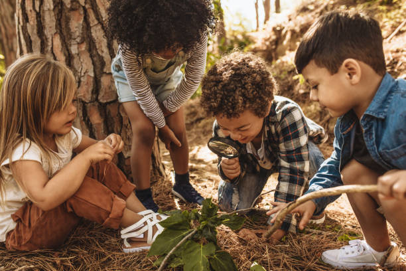
Whether you're at the beach, in the woods, the garden or the local park, scavenger hunts are always a winner. Draw and/or write a list of things to find (feather, stick, flower, shell, pebble, leaf). As each item is found, talk about it together.
Encourage describing:
· I found it … in/ on/ under/ between (place)
· It feels … (smooth, spiky, slimy, soft)
· It’s (colour)
· Bees use it to collect pollen
You could even clap the syllables together e.g. Sea-weed (2 claps)
It's amazing how much language can come from one slimy piece of seaweed!
4. Lie back and go cloud spotting

One of the easiest activities - and one of the most imaginative.
· "That cloud looks just like a dragon."
· "I can see a really long tail."
· "It's changing shape already!"
· "That little cloud is hiding behind the big fluffy one."
There are no wrong answers, just lots of opportunities to describe, explain and imagine.
5. Go on a sensory adventure
Take a slow walk and really notice the world using your senses. What can you...see? hear? smell? feel? (maybe even taste if it's safe!)
· "The bark feels really rough."
· "I can smell freshly cut grass."
· "It's much cooler in the shade."
· "I wonder who might live in this pond... it’s cool and shady”
Using "I wonder..." statements encourages children to think, predict and explain rather than simply giving one-word answers.

6. Make a sensory box
Grab an old shoe box, tray or even a paper plate and head outside. Collect interesting treasures like leaves, stones, flowers, feathers, pinecones, grass etc.
Talk about what has been collected
· "This leaf has tiny little veins running through it."
· "Your stone is much heavier than mine."
· "I like how you've grouped those together."
For older children, turn it into a listening game. Place a barrier between you (or sit back to back) so you can't see each other's collections. Your child gives instructions while you arrange your objects.
· "Put the big leaf next to the stone."
· "Move the feather underneath the flower."
Then compare your finished creations and enjoy spotting the similarities (and the funny differences!). This is brilliant for developing listening, describing and giving directions.
7. Cook something together
Cooking is speech and language therapy disguised as lunch. Whether you're making sandwiches, pizzas, cakes or smoothies, children are practising so many skills.
They can:
· write the shopping list
· find ingredients
· measure and weigh
· follow instructions
· solve problems
· sequence events
· tidy up afterwards (yes, really!)
As you cook, think aloud:
· "First we're measuring the flour."
· "Oops... that's a bit sticky. I wonder what would help?"
· "Now we're mixing everything together."
Take photos as you go, then later enjoy looking back together as your child talks through what happened using words like first, next, then and finally. You can even chat about what went wrong, what worked well, whether you had to swap any ingredients or what you might try doing differently next time.
It's a wonderfully rich language activity from start to finish.
8. Make homemade play dough
A few cupboard ingredients can keep children entertained for ages. Follow this link for a recipe from BBC’s Tiny Happy People.
While you're squishing, rolling and cutting, chat about:
· colours
· shapes
· textures
· sizes
· what you're making
The conversations often become just as valuable as the play itself.
9. Build storytelling skills every day
Stories aren't just found in books. Everyday routines make brilliant storytelling opportunities.
For example:
· brushing teeth
· getting dressed
· making breakfast
· going swimming

Talk through what happened using simple sequencing. Younger children might use ‘Now → Next’ e.g. now I squeeze toothpaste onto the toothbrush, next I brush my teeth. Older children could use ‘First → Next → Then → Finally’
Taking photos during the day can also help children retell what happened from beginning to end.
10. Visit your local library
Libraries are one of the best free resources during the holidays. Read. Read again. Then chat about the story.
Instead of asking, "Did you like it?" try questions like:
· Which part was your favourite?
· How do you think that character felt?
· What surprised you?
· What do you think will happen next?
· Could the story have ended differently?
· What was the problem?
· How was it solved?
Talking about stories builds vocabulary, understanding, memory and confidence and it's a lovely excuse to snuggle up together with a good book.
The best bit?
Children don't need hours of structured learning to develop their speech and language skills. They need conversations. They need opportunities to wonder, explore, explain, imagine, laugh, make mistakes and tell stories.
So this summer, don't worry about creating the perfect activity.
· Go for a walk
· Play a silly word game
· Bake some wonky biscuits
· Watch the clouds
· Collect a pocket full of treasures
Those everyday moments are often where the biggest learning happens, and they'll probably become the memories your children treasure most!


